
Stop faffing around in the Gym: Follow these 2 rules instead.
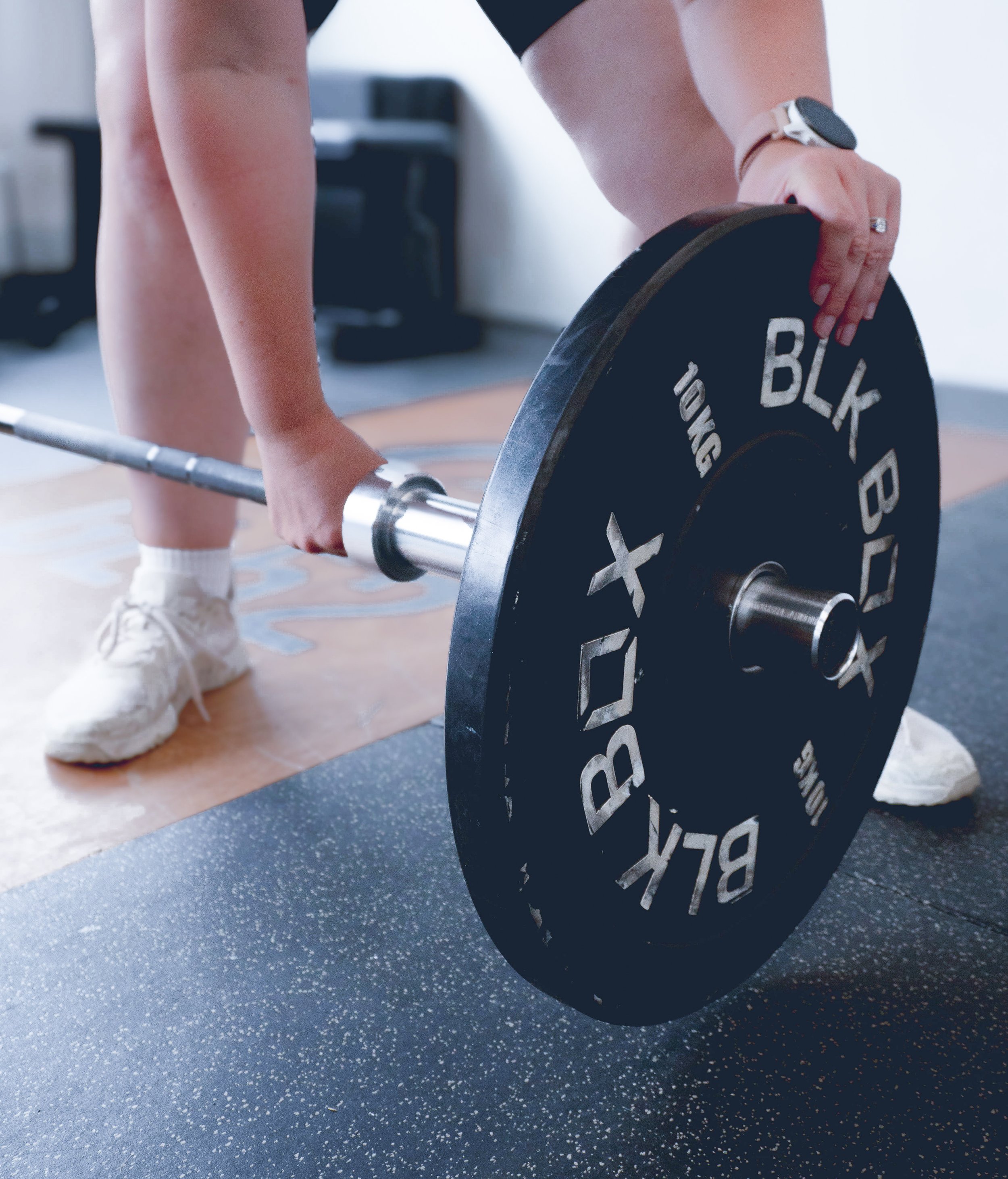
One of the most frustrating things about the gym, is that often just getting through the door feels like an achievement. I remember when I was so nervous that I had to beg my husband to come with me for a free trial at our local gym in Cheltenham. But once you’ve crossed that initial barrier and you know where the changing rooms are and how to use some of the equipment, then what?
I know what it’s like to reorganise your day, find childcare, pack your bag, convince yourself to go, walk through the doors… and suddenly realise you’re wandering around not really knowing what to do.
So you jump on a machine because it’s free.
Then maybe another.
Then 10 minutes on the treadmill.
Maybe some ab work.
And then…? You leave feeling quite pleased with yourself because you made it there.
But after a few weeks, nothing really changes. And it’s the most frustrating thing in the world because all that effort….and what was it for?
The problem usually isn’t that you’re not trying hard enough.
Most of the time, it’s not effort that is the issue. The problem is usually that there’s no structure behind what you’re doing.
Random workouts feel productive because you’re moving, sweating and doing something. But if you’re constantly changing exercises, using machines based on what’s available or never repeating the same movements consistently, it becomes really difficult to build strength or track progress over time.
Progress comes from repetition, not randomness.
The body adapts when we give it a reason to and that usually means repeating movements often enough that:
your technique improves
your confidence improves
and over time, your body can tolerate a little more load, reps or challenge
You need enough structure that you can learn what a hard rep feels like, maybe flirt a little with failure, have to go down a weight and, over time, see whether you’re progressing.
And, you almost certainly, need less variety than you think.
A lot of women assume they need endless variety to make exercise “work”. But, in reality, good strength programmes repeat similar movement patterns week after week:
a squat
a hinge
a push
a pull
core work
conditioning
Every time you constantly change movements or training styles, your body has to spend time learning that movement again rather than progressing it. Its only over time, of repeatedly exposing those muscles, joints and mechanics to progressively harder loads that we gain strength…and what you would outwardly see as “progress”.
The easiest solution?
If you want your training to feel purposeful and progressive rather than random, there are two things that make the biggest difference.
1) Follow a Plan
Honestly, it sounds so simple doesn’t it. But, one of the best things you can do is stop trying to reinvent your workouts every time you walk into the gym.
Find a plan.
It does not need to be fancy. Especially if you’re new to strength training, simplicity is usually far more effective than trying to do everything at once.
There are hundreds of beginner programmes available online now. You can use an app, work with a Coach, follow a structured programme or even use something simple like ChatGPT to help you build a starting point. Access to information is wonderful these days, use it. The important thing is that you walk into the gym knowing what you’re there to do.
2) Start tracking what you do
Even something as simple as using your Notes app can completely change how purposeful your training feels. If you used 6kg dumbbells for goblet squats last week, write it down.
Next week, start there again.
See how it feels. Maybe you stay there. Maybe you increase the weight. Maybe you add reps. Progress is not linear every week, but over time you should be able to see a trend.
And do you know what? You cannot see a trend if every session is completely random.
You’ve got this.
You do not need to know everything before you start strength training.
You do not need the perfect programme. But having some structure behind your workouts can completely change how confident, capable and motivated you feel in the gym. And not only that, how much “progress” you feel you’re making. Because eventually, the goal is not just to “go to the gym”.
It’s to actually feel stronger because of it.